Balayage vs. Ombr\u00e9: What's the Difference and Which is Best for You?
Balayage vs Ombr\u00e9: the quick answer (in 60 seconds)
If you are short on time, here is the simple version: go balayage if you want soft, natural-looking colour that grows out gracefully and needs minimal maintenance. Go ombr\u00e9 if you want a bold, noticeable dark-to-light gradient with brighter ends and a more dramatic look.
Both techniques are popular at Image London for good reason — they each deliver different results. The right choice depends on your hair type, your colour goals, and how much upkeep you are happy to commit to. Read on for the full comparison.
Balayage vs Ombr\u00e9: comparison table
| Factor | Balayage | Ombr\u00e9 |
|---|---|---|
| Best for | Soft, natural dimension; low-maintenance grow-out | Bold dark-to-light gradient; noticeable contrast |
| Maintenance | Low — refresh every 3–6 months | Low–moderate — refresh every 3–6 months |
| Appointment time | 2–4 hours | 2–4 hours |
| Cost | ~£120–£270+ | ~£120–£270+ |
| Grow-out | Very soft — no harsh root line | Gradual — regrowth is less obvious |
| Damage risk | Low to moderate | Moderate — ends lifted more heavily |
Real talk: prices swing based on length, density, salon location, and colourist experience. Always ask for a personalised quote during your consultation.
The key difference: technique vs result
- Balayage is a technique — a freehand, hand-painted method of applying colour.
- Ombr\u00e9 is a result — a dark-to-light gradient effect from roots to ends, regardless of how it was achieved.
This is the single most important distinction. Balayage describes how the colour is applied. Ombr\u00e9 describes what the finished hair looks like.
What is balayage (in plain English)?
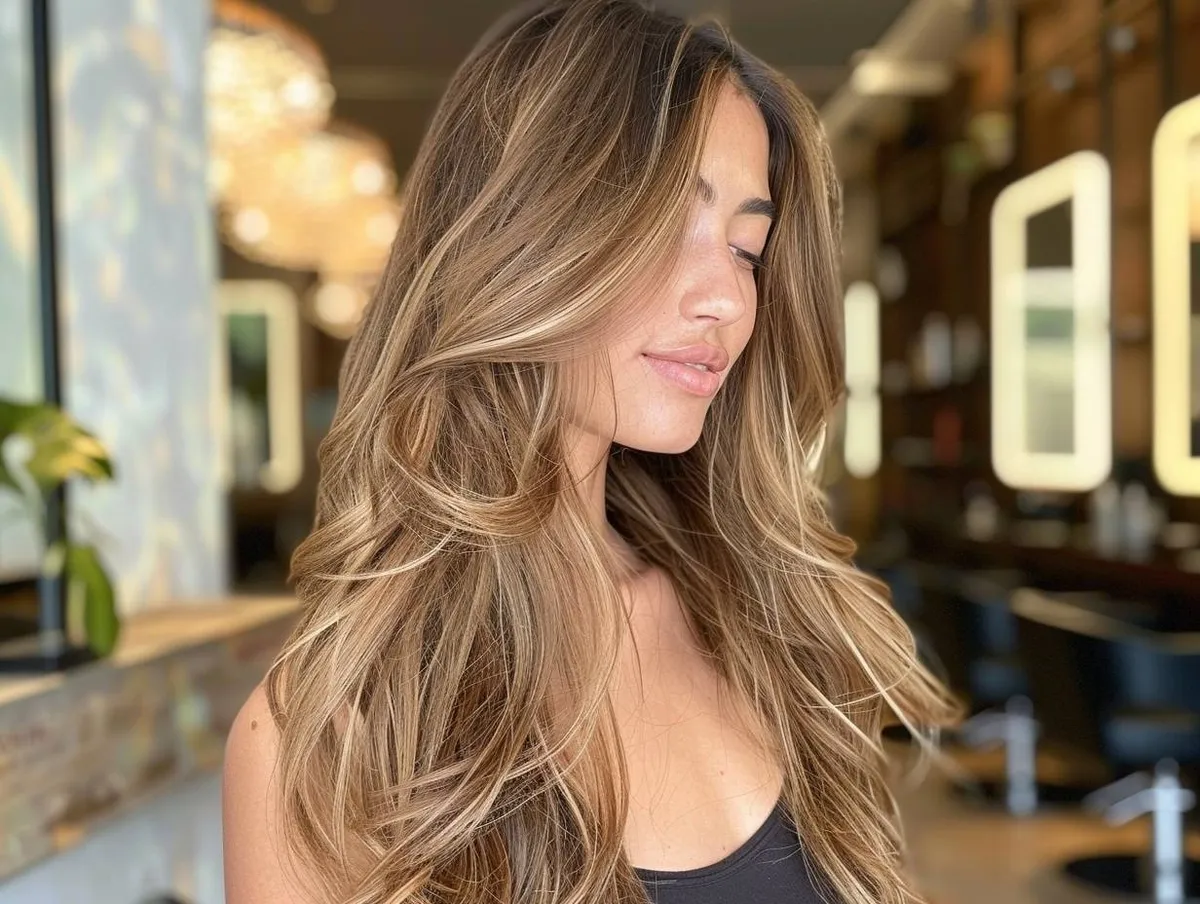
Balayage (pronounced bal-ee-ahj) is a French word meaning "to sweep" or "to paint". It is a freehand technique where the colourist sweeps lightener or dye onto sections of your hair — typically focusing on the mid-lengths and ends, with softer placement around the face.
- Hand-painted — no foils, no uniform sectioning.
- Soft grow-out — no hard root line means it grows out naturally.
- Customisable — placement, tone, and intensity adjusted to suit your face shape and hair texture.
Want to see what balayage can do for you? Check out our Balayage & Ombr\u00e9 services page or book a consultation.
What is ombr\u00e9 (and what it isn't)?
Ombr\u00e9 (pronounced om-bray) comes from the French word for "shaded". It describes a hair colour result where the hair transitions from darker at the roots to lighter at the ends.
What ombr\u00e9 is:
- A dark-to-light gradient from roots to ends
- A finished look that can be achieved with various techniques
- Customisable in terms of how gradual or sharp the transition is
What ombr\u00e9 isn't:
- A specific application technique — it is the result, not the method
- The same as sombre (which is a softer, more subtle version)
- Always high-maintenance — roots stay dark so regrowth is far less noticeable
Explore the ombr\u00e9 options we offer on our Balayage & Ombr\u00e9 services page.
Sombr\u00e9, foilyage, babylights, highlights: where they fit
- Sombr\u00e9 — a softer, more subtle version of ombr\u00e9.
- Foilyage — balayage technique applied inside foils for extra lift.
- Babylights — very fine, delicate highlights throughout the hair.
- Highlights — traditional foiled highlights applied root-to-end.
Balayage vs ombr\u00e9: side-by-side
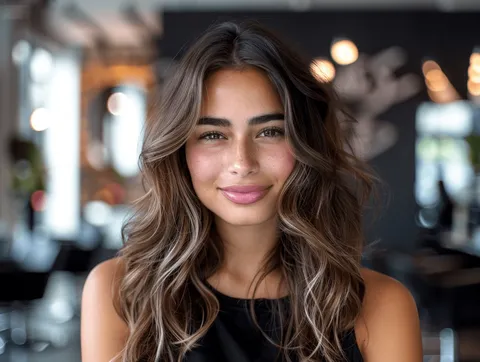
Balayage: Soft, natural-looking dimension. Face-framing brightness. No harsh root line. Concentrated on surface layers.
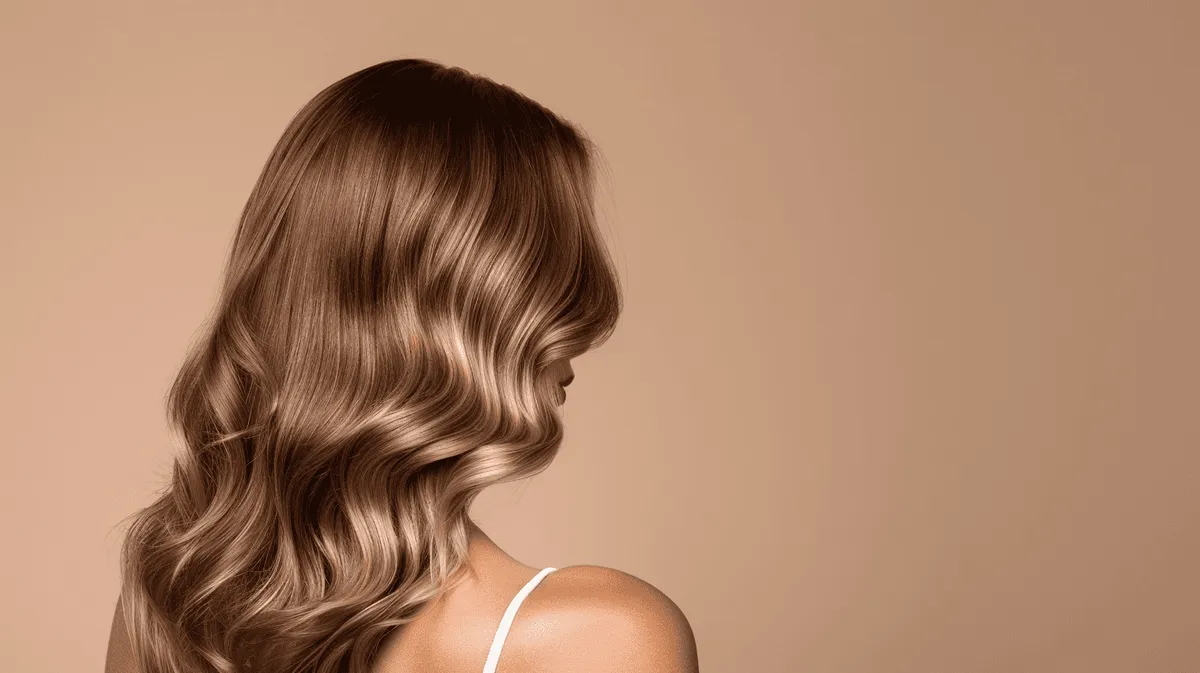
Ombr\u00e9: Clear dark-to-light gradient from roots to ends. More noticeable contrast. Transition point can be high or low. Ends are typically much lighter.
Which suits you best? A quick decision guide
Choose balayage if: you want a natural, sun-kissed look; prefer low-maintenance colour; want face-framing brightness; are trying colour for the first time.
Choose ombr\u00e9 if: you want a bold, noticeable transformation; like bright, lightened ends with darker roots; want something dramatic but lower maintenance than full-head colour.
Not sure? Sombr\u00e9 is a great middle ground. If you are still weighing up balayage vs ombr\u00e9, you can book a balayage consultation and our colourists will help you decide.
Best choice by hair type and density
Fine hair: Balayage adds visual dimension without weight. Ombr\u00e9 can work but heavier lifting at ends may make fine hair look thinner.
Thick hair: Both work well. Ombr\u00e9 looks stunning on thick hair with the bold gradient amplified by volume.
Curly and coily hair: Balayage is often preferred — the hand-painted technique follows the natural curl pattern. Ombr\u00e9 needs careful placement.
Best choice by hair length and haircut
Bob: Short hair limits gradient. Balayage works well; sombre is better than full ombr\u00e9.
Lob (long bob): Versatile for both. Balayage gives soft dimension; ombr\u00e9 creates a stylish gradient.
Long layers: Ideal for both. Balayage gives cascading dimension; ombr\u00e9 creates dramatic gradient through length.
Best choice by base colour
Blonde: Balayage adds subtle dimension. Ombr\u00e9 gives a sun-faded, beach-babe gradient.
Brunette: Balayage is gorgeous — caramel and honey tones create warmth. Ombr\u00e9 creates striking contrast with warm or copper ends.
Black: Balayage creates subtle richness. Ombr\u00e9 is dramatic; going from black to light ends is often a multi-session process.
Red: Balayage adds coppery dimension. Ombr\u00e9 gives a fiery gradient from deep red roots to bright copper ends.
Skin tone and undertone: picking the right tone
- Warm undertones — golden, honey, caramel, and copper tones.
- Cool undertones — icy blonde, ash brown, and platinum tones.
- Neutral undertones — most tones work. Your colourist can help you choose.
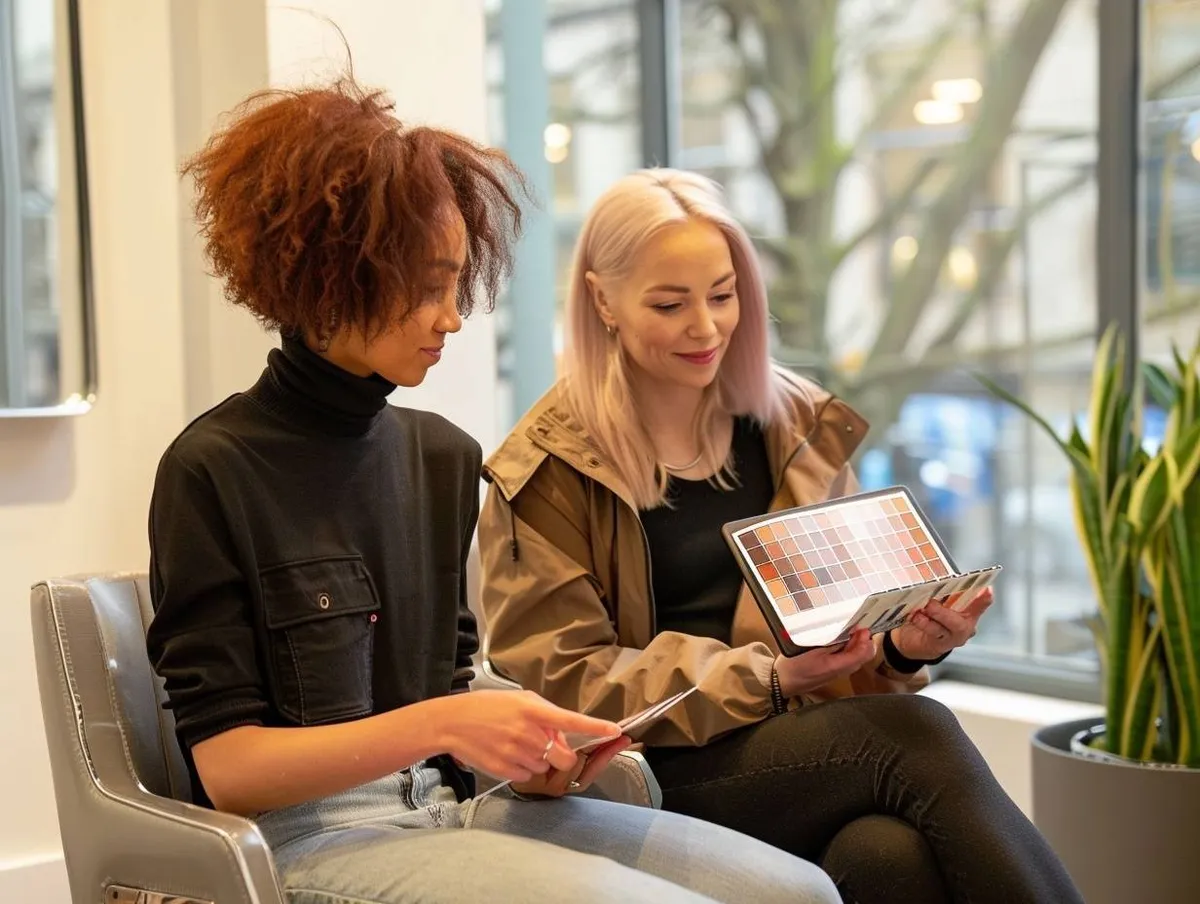
What you should ask for at the salon
- Specific tone references — not just "blonde" but "warm caramel" or "cool ash"
- Placement preferences — tell your colourist where you want the most brightness
- A patch test if you have never been coloured at this salon before
- A consultation before the actual appointment, especially for major changes
- Photos of looks you love — and looks you hate
- Clarity on whether toner is included in the price
Bring 3–5 photos: At least one matching your current length and texture. Be realistic — filter-heavy Instagram photos are rarely achievable in one session.
UK trust markers
- Patch test: Required 24–48 hours before your colour appointment if new to the salon.
- Consultation: Covers your hair history, current condition, desired outcome, realistic timeline, and cost estimate.
- Dark-to-light timelines: Going from dark to light hair is rarely a one-session process. Expect 2–4+ sessions.
What happens during a balayage appointment
- Consultation review — colourist confirms the plan and checks your hair condition.
- Sectioning — hair is divided into manageable sections.
- Hand-painting — lightener is swept onto selected sections.
- Processing — lightener develops. Time depends on your starting colour.
- Toning — toner is applied after rinsing to neutralise unwanted warmth.
- Finish and style — blow-dried and styled so you can see the result.
What happens during an ombr\u00e9 appointment
- Consultation review — confirming gradient placement, transition point, and desired contrast.
- Sectioning — hair is sectioned for controlled gradient application.
- Application — lightener applied from mid-lengths to ends, with careful blending at the transition.
- Processing — colour develops. Ends process longer for maximum lightness.
- Toning and finish — toner applied to achieve the desired shade, followed by rinse, dry, and style.
Balayage vs ombr\u00e9 maintenance
Balayage: Refresh every 3–6 months. Toning every 8–12 weeks. Use colour-safe, sulphate-free products.
Ombr\u00e9: Refresh every 3–6 months — darker roots mean regrowth is less obvious. Ends may need glossing every 6–8 weeks. Purple/blue shampoo helps.
Costs: what affects the price
- Hair length — longer hair requires more product and time
- Hair density — thicker hair takes longer
- Starting colour — darker bases need more processing
- Desired result — subtle changes cost less than dramatic transformations
- Colourist experience — senior colourists charge more but deliver better results
Why cheap colour is expensive later: Colour corrections cost more than getting it right first time. Over-processed hair needs repair treatments.
How long do balayage and ombr\u00e9 last?
Balayage: typically 8–14 weeks before toning, full refresh every 3–6 months. Ombr\u00e9: typically 8–14 weeks before toning, full refresh every 3–6 months. Timeline factors: home care routine, water quality, sun exposure, washing frequency.
Common mistakes that ruin balayage
- Over-processing — damages hair and creates brassy results
- Poor placement — colour too high or too low
- Skipping toner — balayage looks brassy and unfinished without it
- Wrong tone for skin — warm tones on cool skin can look washed out
- DIY balayage kits — rarely deliver professional results
Common mistakes that ruin ombr\u00e9
- Harsh transition line — unblended gradient looks like a mistake
- Ends too light too fast — aggressive lifting damages ends
- Wrong transition point — too high looks like regrowth; too low barely shows
- Ignoring hair condition — ombr\u00e9 on damaged hair leads to breakage
- Skipping maintenance — ends need regular toning and conditioning
Can balayage and ombr\u00e9 be done together?
Yes — and the combination is stunning. Options include: balayage placement with ombr\u00e9-style gradient; foilyage for lift with balayage softness; balayage throughout with ombr\u00e9 ends; custom combinations.
Book a consultation and we can design a bespoke colour plan.
If your hair is already coloured
Box dye: Difficult to work over. Your colourist may need to do colour removal or corrective process first. Old highlights: Colourist will assess and work with (or around) existing highlights. Brunette-to-blonde: A process, not a single appointment. Expect 2–4+ sessions.
How to keep it looking expensive at home
- Sulphate-free shampoo — sulphates strip colour and moisture.
- Deep conditioning mask weekly — colour-treated hair needs extra moisture.
- Heat protection always — the single most important product for colour longevity.
- Purple/blue shampoo — neutralises brassiness between toning appointments.
- Reduce washing frequency — aim for 2–3 washes per week.
- Regular trims — every 6–8 weeks to prevent split ends.
Best hairstyles to show off balayage vs ombr\u00e9
Balayage looks best with: Beach waves, soft layers, half-up styles, textured bobs.
Ombr\u00e9 looks best with: Long, straight hair, loose curls, high ponytails, braids and twists.
FAQs about balayage vs ombr\u00e9
What is the difference between balayage and ombré?
Is balayage better than ombré?
How long does balayage last?
How long does ombré last?
How much does balayage cost in the UK?
Does ombré damage your hair more than balayage?
Can you do balayage on dark hair?
Balayage vs highlights vs ombré — which should I choose?
Do I need toner after balayage or ombré?
Book Your Beautiful Balayage Today
Click the button below to book your balayage appointment at Image London Salon.
Book Balayage Now